On
Day Two, we made our way to Florence, the
capital of Tuscany. On our way there, we stopped in Pisa for
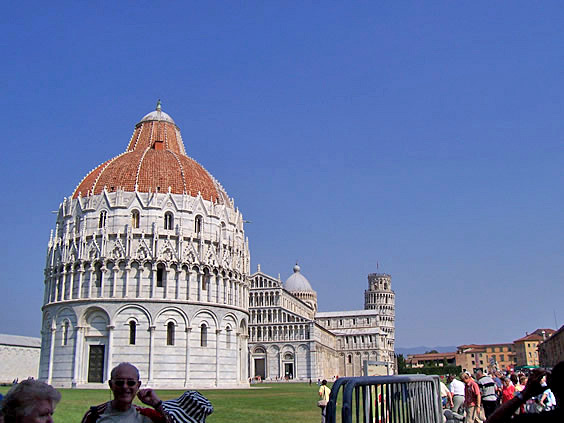
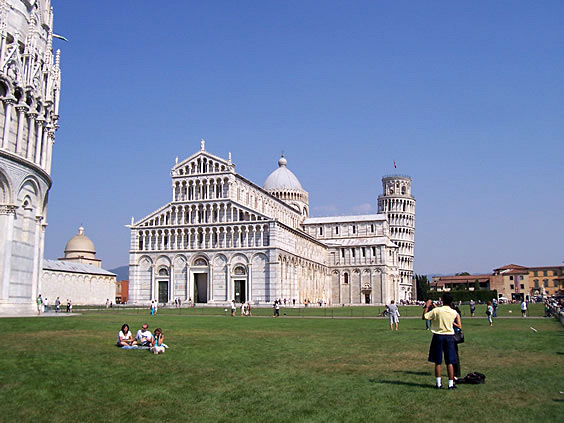
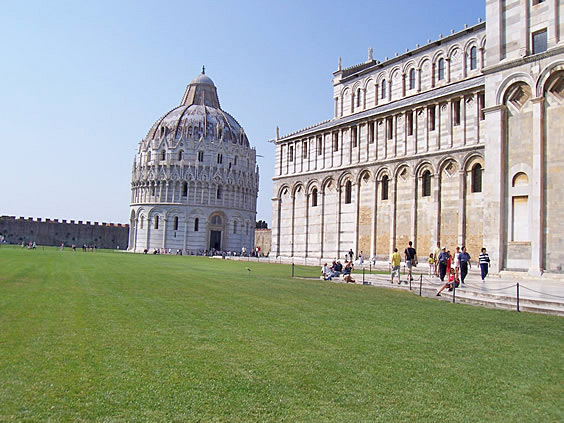
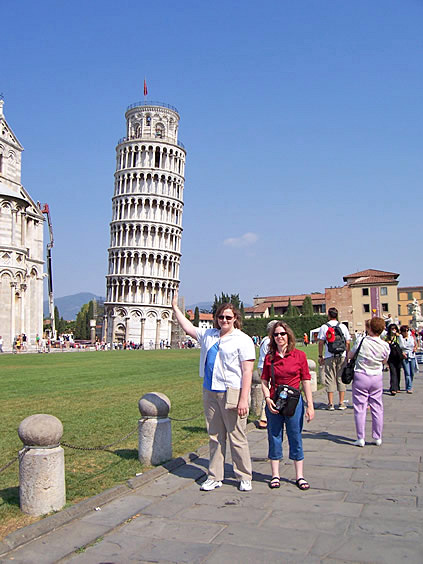
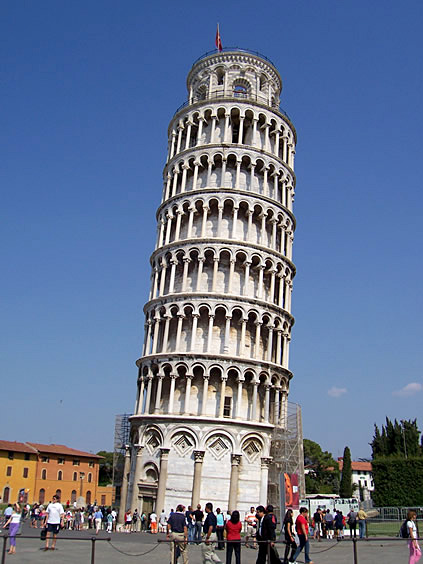
a short break. We were able to see the medieval Piazza dei
Miracoli (Miracle Square), including the famous Leaning Tower
of Pisa. I was amazed to see that the Leaning Bell Tower is
not the only thing in the square. In fact, it is part of a
large complex, including a Duomo (cathedral), Battistero (baptistry),
the cemetery Camposanto, and the Campanile (Bell Tower).
I
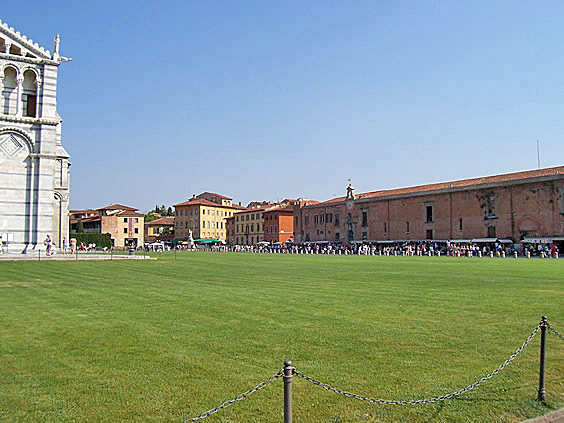
also wasn't expecting all the street vendors in their small
outside stalls. There were quite a few stalls on the interior
perimeter of the square and what seemed like hundreds of stalls
outside the walls of the square. We were warned to watch out
for gypsies and pick-pocketers, but we didn't experience any
of those, thank goodness.
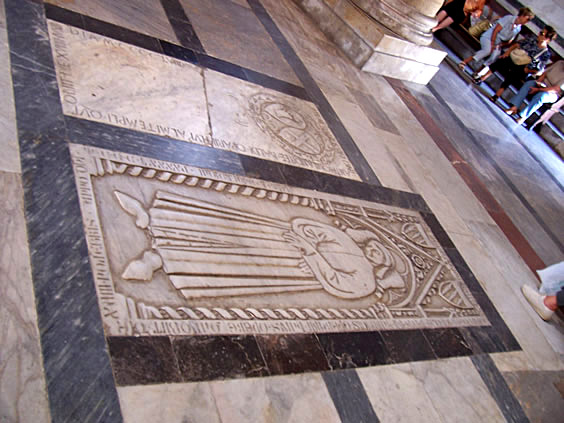
Here
are some pictures of the Piazza and of the interior of some
of the monuments: |
Building
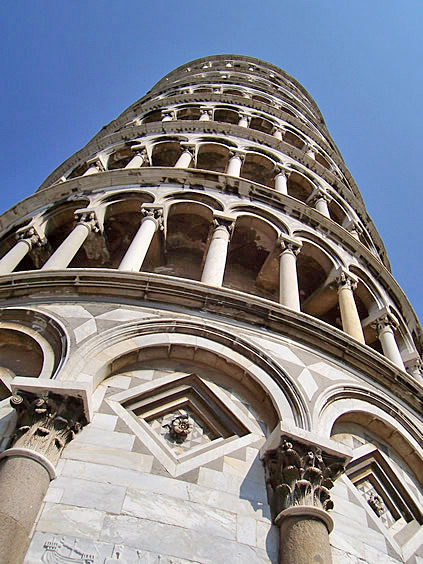
started on the Tower in 1173, and it was clear from the beginning
that the fine river soils of the Pisan Plain were collapsing
under the tower's weight. At just three stories high the tower
slumped; building continued with irregular-shaped stonework
in an attempt to counterbalance this. As work continued, the
ongoing vertical compensation has resulted in the slight banana
shape seen today. The final layer, the bell chamber itself,
was finished in 1350, and was built truer to the perpendicular
than the rest of the tower.
A
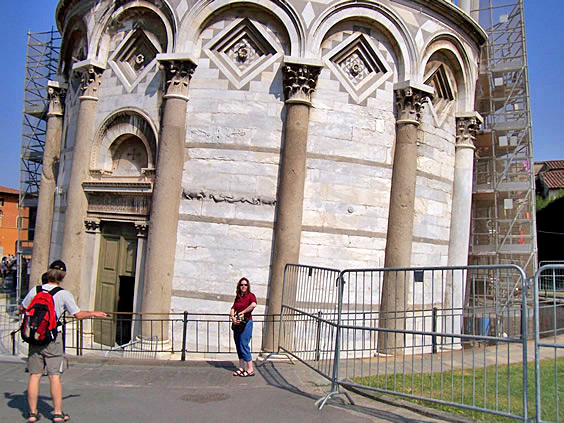
few years ago, the tower reached a critical tilt and had to
be corrected to prevent it from falling over. Here are some
statistics I found on the Internet about the amount it was
corrected:
| * |
Rate
of Fall in 1990: 1.2 mm (1/20") every year
("Un millimetre per anno") |
| * |
Amount
of tilt correction from 1990 - 1999: 25 mm (about
1.0") |
| * |
Amount
of tilt correction from 1999-2001: 43.8 cm (about
17.25") |
| * |
Date
that Tower was last at current tilt: 1700 |
|
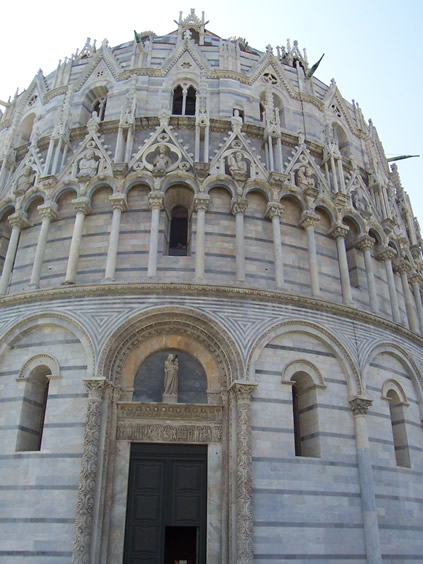
The
Baptistery (Battistero) is the largest of its kind in Italy.
Like so many buildings in Italy, it was started in one style
and finished in another; the first three tiers are Romanesque
whilst the pinnacled layer supporting the unusual dome is
Gothic and was added in the latter half of the 13th century.
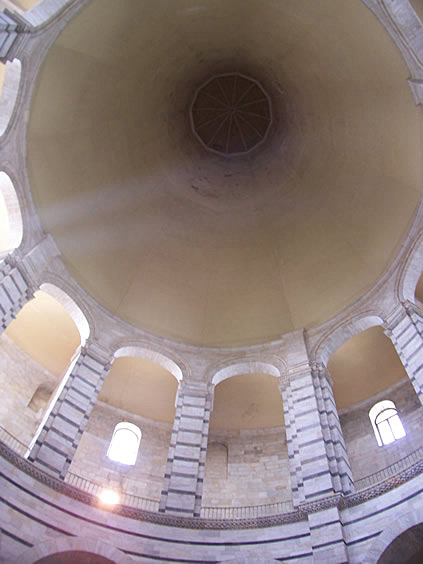
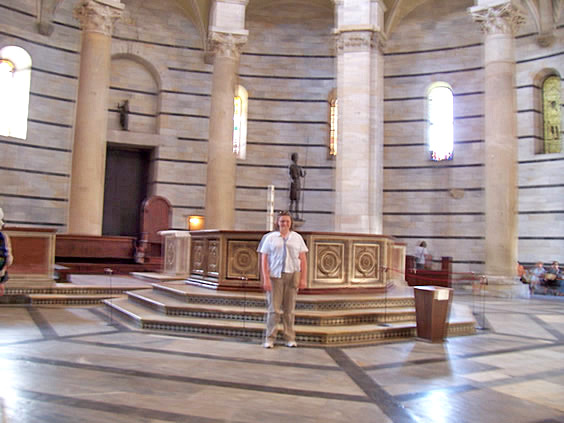
Perhaps
the most striking feature of the interior is its simplicity
and lack of decoration. The acoustics in this baptistry are
incredible. I was told that a person can sing one note, then
jump down to another note while the first note would still
be echoing within the dome. In truth, one person could harmonize
with himself. Pretty amazing! |