In
the evening of Day Four and on Day
Five, we explored the intriguing city of Venice.
The first thing our tour director, Elisabetta, told us to
do in Venice was to "get lost". She said that is
the best way to see this remarkable city. You never truly
get lost, because you can always following the signs to the
major landmarks (Piazza San Marco and the Rialto Bridge),
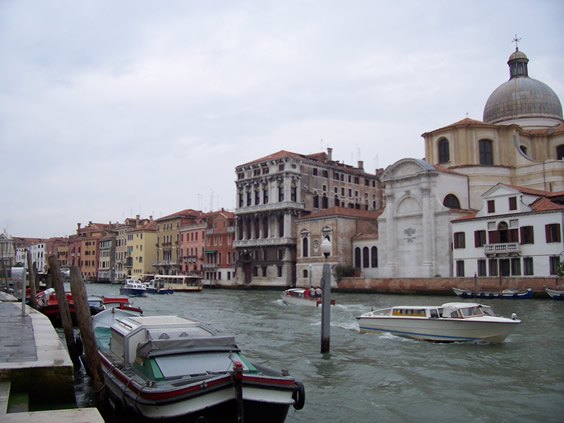
or you can just hop on a waterbus, which will take you anywhere
you want to go.
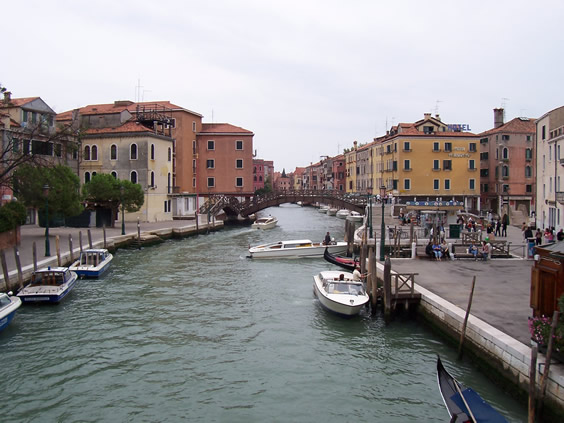
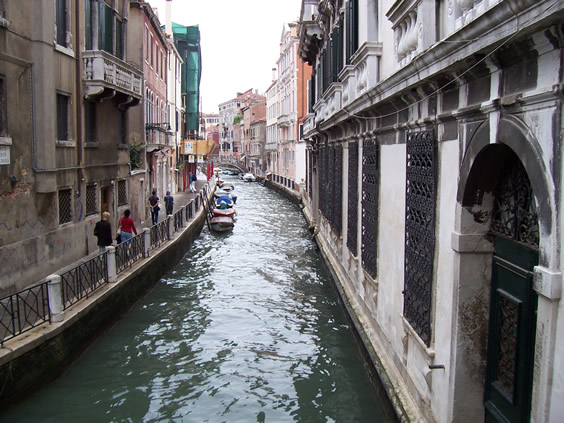
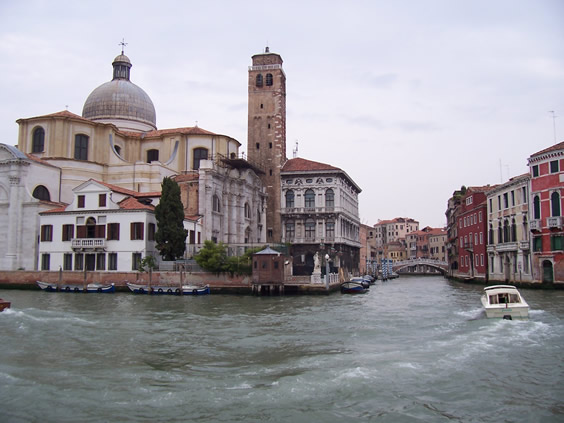
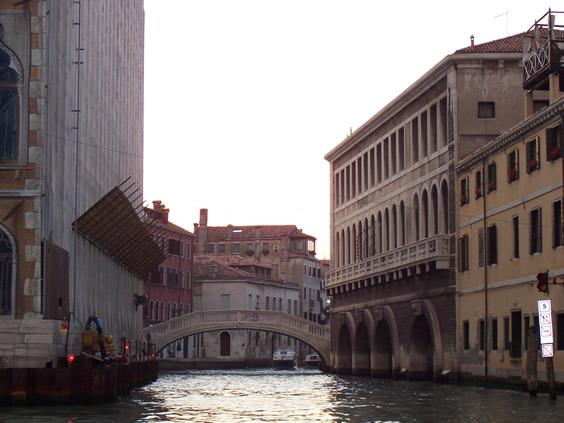
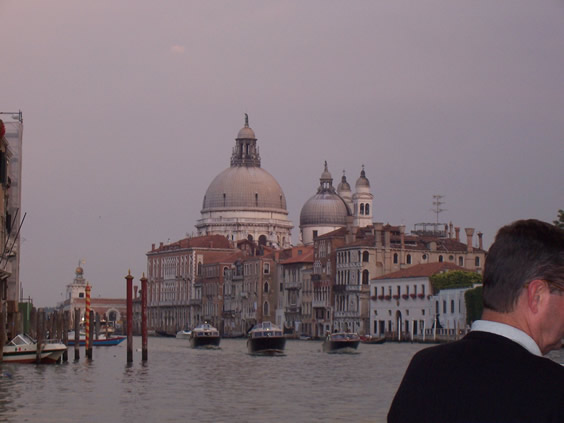
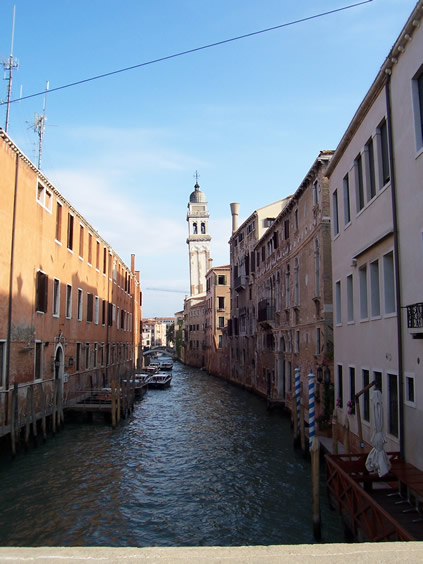
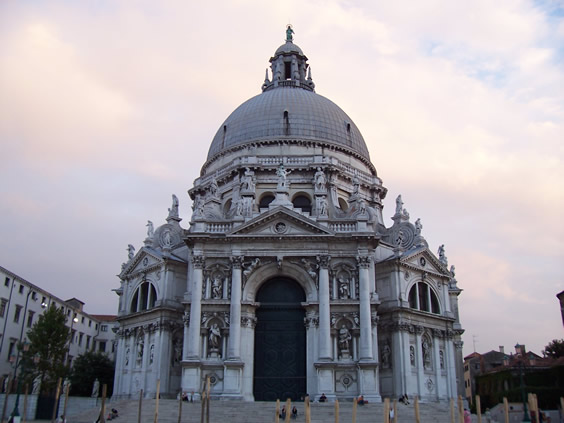
Venice is dazzling, fairytale-like labyrinth of canals, alleys,
picturesque houses and impressive squares and buildings. However,
it is known to be romantic, which I do not agree. It is very
intriguing, but is also dirty, run down, and rather smelly
in the summer heat. I was surprised at how dirty and mossy
it really was. But that only added to the charm of the city.
Venice
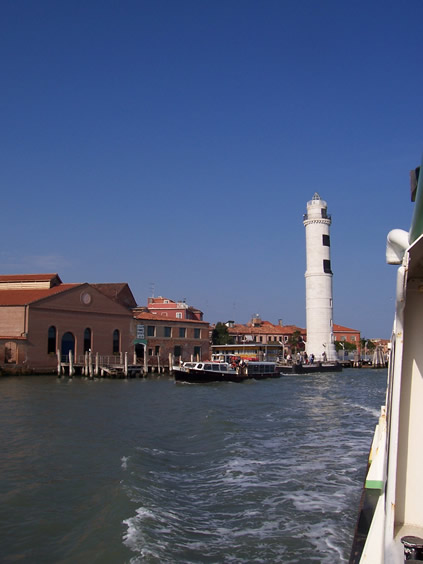
consists of hundreds of small and large islands. Central Venice
alone has 118 islands. As you cross over one of the 177 canals
on one of the 400 bridges around Venice, you are actually
crossing onto another island. Other islands close to Venice
include Burano, known for lace making, and Murano, know for
its glass.
Venice
was formed when thousands of refugees fled the mainland during
the brutal invasion of Attila the Hun and headed into the
Lagoon. These very resourceful people imported billions of
trees from neighboring forests and inserted the trunks into
the mud and clay. They built a stable floor with stone and
marble. Houses had to be built on piles and had to be small
and close to one another in order to use the ground as effectively
as possible. The tree trunk foundation has since fossilized,
as there was no oxygen in the mud to cause the wood to decay.
People
have said that Venice will become the next Atlantis, sinking
into the water during the next century. That is not true.
The city was created about 500 AD and has only sunk 22 centimeters
since it was built.
Venice
was finished being built in the 16th Century and has not been
added to since. Of course, there have been yearly restorations
of buildings damaged by the harsh climate, but what you see
now is what the people saw centuries ago.
Some
very famous people made their name in Venice, among those
people are Marco Polo and Giacomo Casanova. |