Florence (Firenze)
page 5 of 6
 
Piazza Santa Croce:

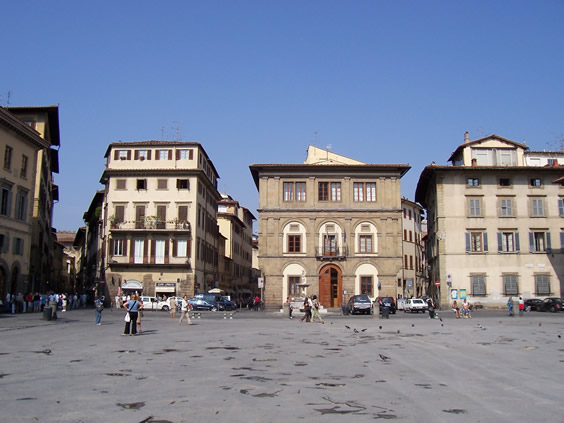
The huge rectangular space of Piazza Santa Croce, created in front of the Franciscan Basilica, is the result of a 13th-14th century urban project whose mediaeval origins can still be clearly seen in many of the buildings surrounding its perimeter. At the opposite end of the piazza is Palazzo Cocchi-Serristori, which is an original adaptation of a 14th century house carried out by Baccio d'Agnolo towards the end of the 15th century.

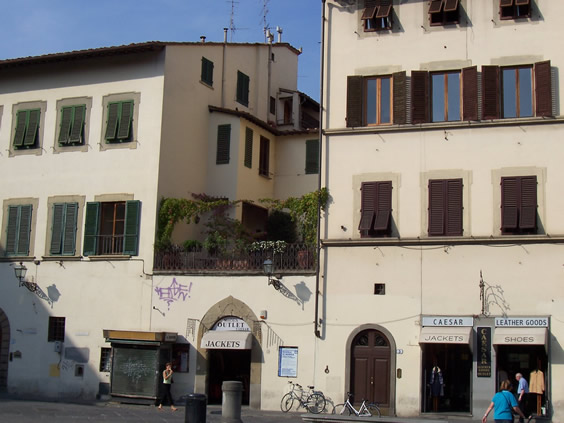
Piazza Santa Croce is also know for the many leather and gold shops around the perimeter. Here is where we visited the Leather store, Misuri.


Palazzo Cocchi-Serristori (center building)
 
Basilica of Santa Croce:

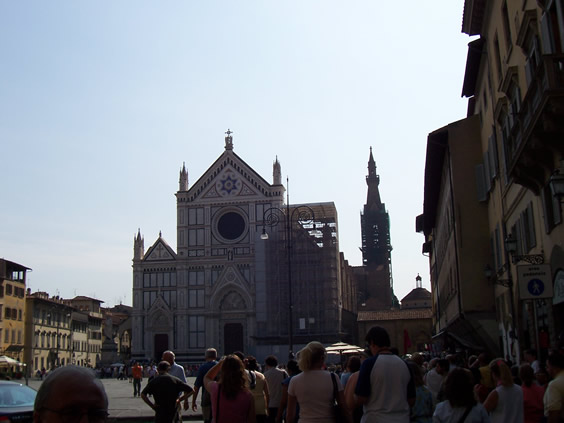
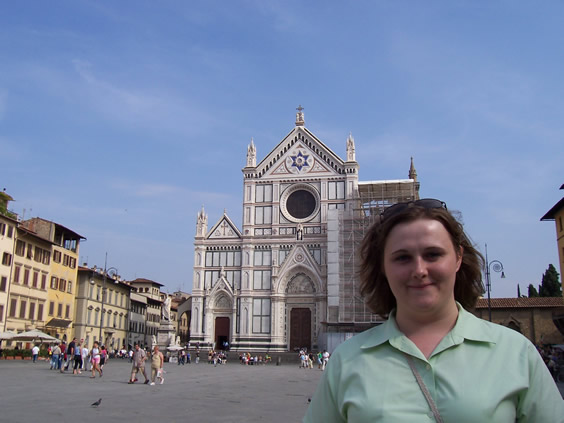
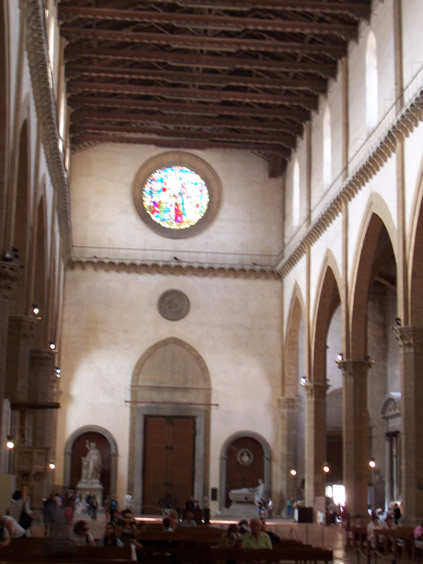
Basilica of Santa Croce dominates the Piazza Santa Croce. This basilica was began in 1294 according to the plans of Arnolfo di Cambio and is the largest Franciscan church in the world. From the original Franciscan church, it evolved to become a religious "town hall" for the important families and corporations when Florence was ruled by the Medici family.

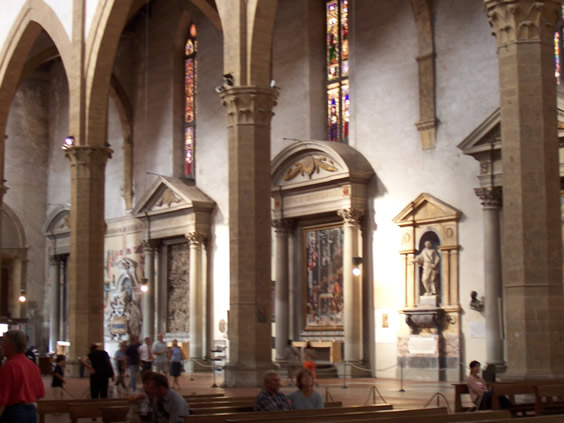
This Basilica has always been a prestigious symbol and a gathering place for some of the greatest artists, theologians, religious figures, writers, humanists, and politicians. In fact, the Basilica is the burial place of Florence's most illustrious citizens in each of these fields.

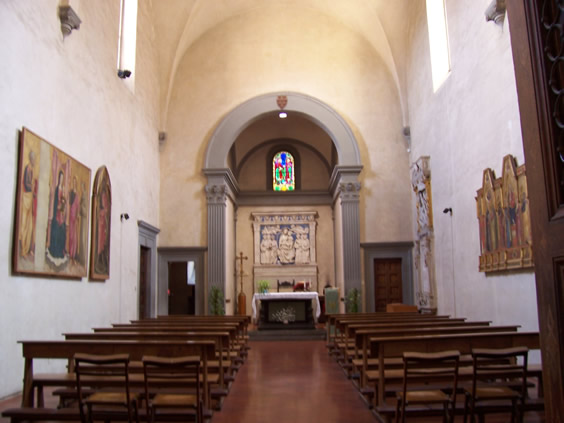
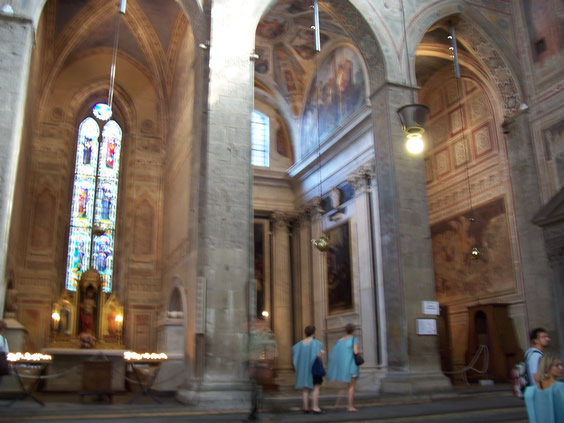
With its impressive gothic architecture, marvellous frescoes, altar pieces, precious stained-glass windows, and numerous sculptures, the Basilica represents one of the most important pages in the history of Florentine art from the thirteenth century onwards.

Interesting Note: A strict dress code is enforced inside this Basilica. If tourists do not adhere to this dress code, blue paper covers are provided to the offenders.


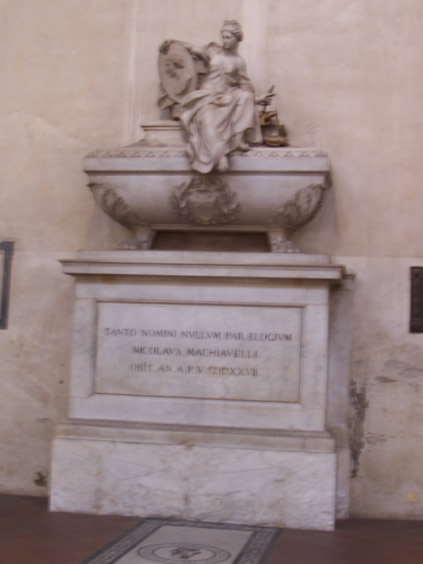
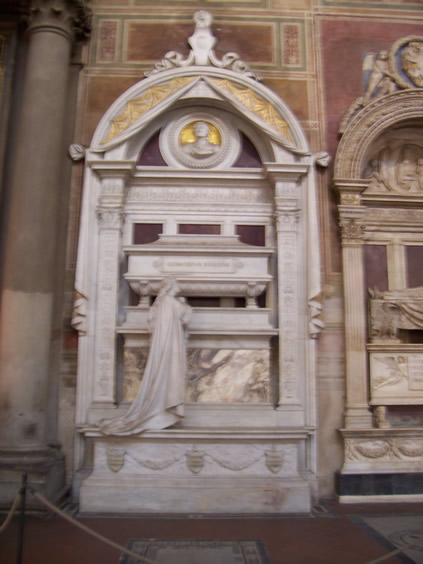
Tomb of Niccolo Machiavelli (left) / Tomb of Gioacchino Rossini (right):
 
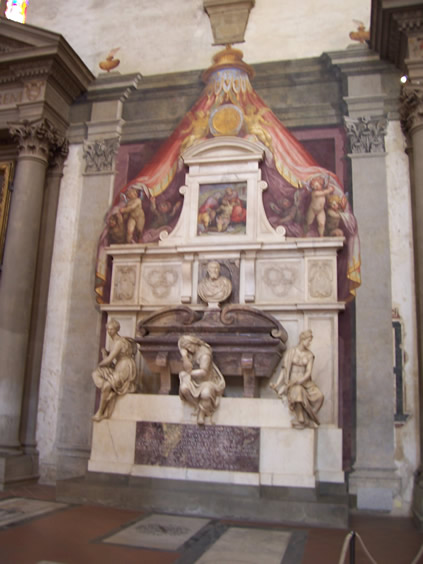
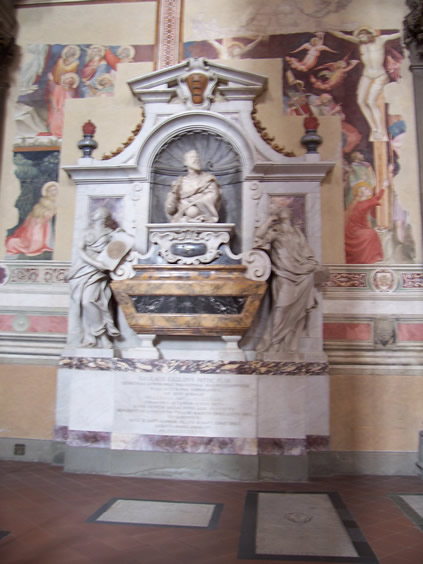
Tomb of Michelangelo Buonarroti (left) / Tomb of Galileo Galilei (right):
 
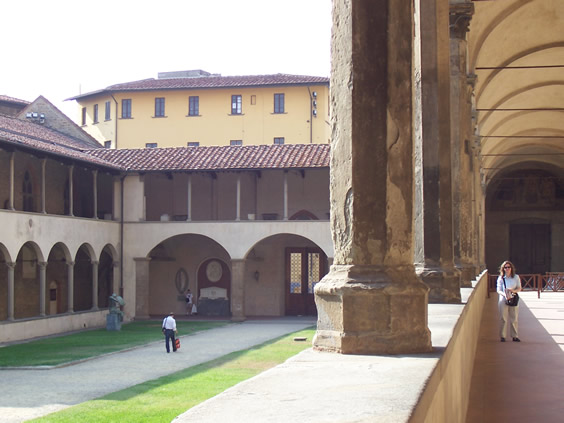
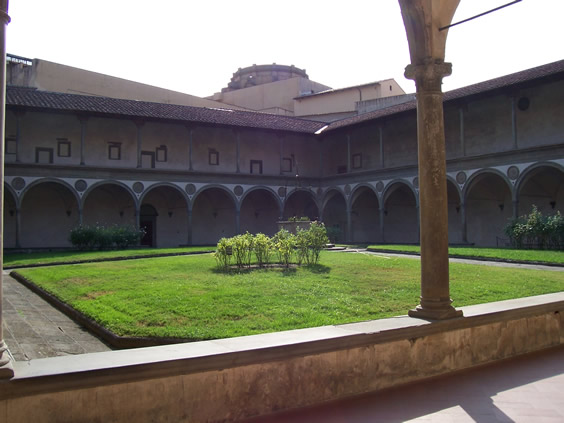
Cloister of the Convent (left) / Greater Cloister (right):

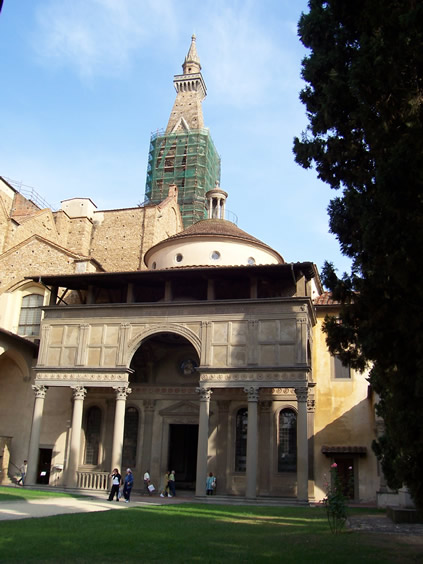
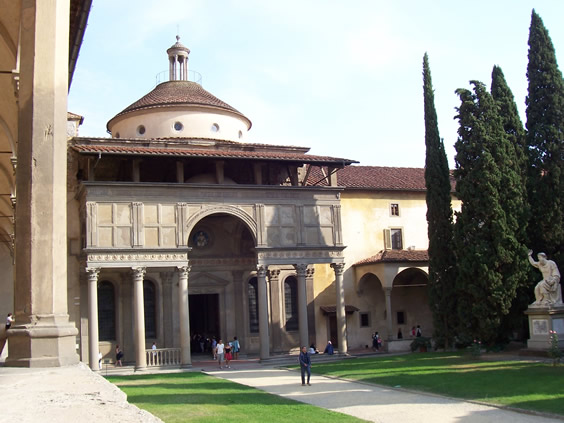
A gate on the right of the Basilica leads into the first Cloister of the Convent, or the Cloister of the Dead, which contains the Pazzi Chapel (1430-45), a masterpiece in miniature by Filippo Brunelleschi, and the Museum of the Opera of Santa Croce, which is housed in the Refectory and other rooms of the Convent. The second Cloister is known as the Greater Cloister, which lies to the right of the Cloister of the Convent.

 
Pazzi Chapel inside the Cloister of the Convent:
 
Previous Page | Next Page
 
Home | Vatican | Rome | Pisa | Florence | Verona | Venice | Return to Rome | Landscape | Dan Brown