The
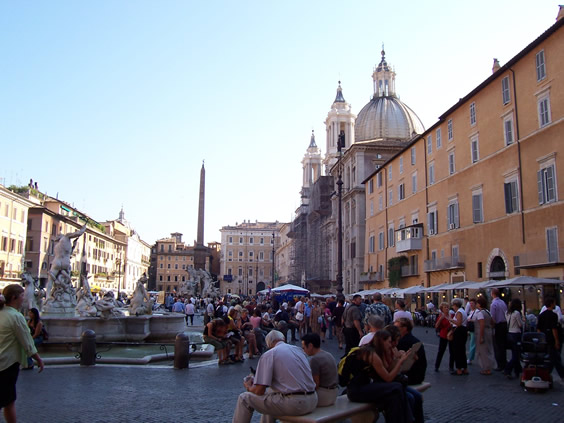
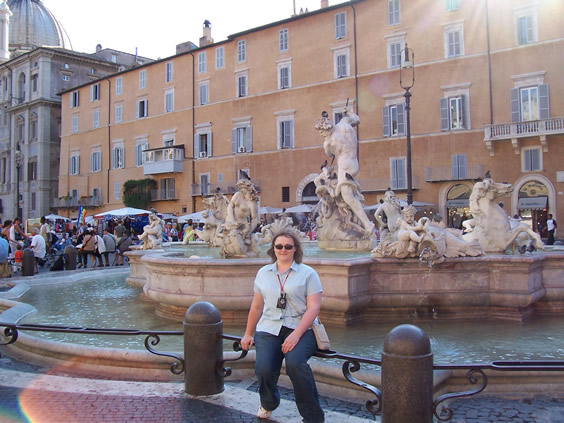
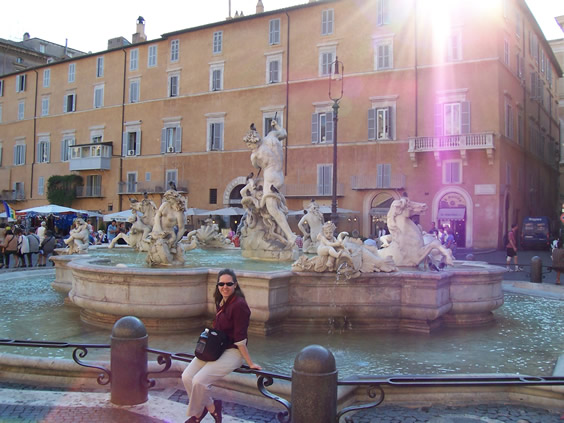
Piazza Navona, also know as Circus Agonale, is the largest
piazza in the city. It preserves almost exactly the
shape and size of the ancient Stadium of Domitian, which
once occupied this site. The stadium, which could hold
approximately 30,000 spectators, was originally used
for athletic contests. However, after the Colosseum
was injured by fire in 217, it was used for several
years for gladiatorial combats.
Three
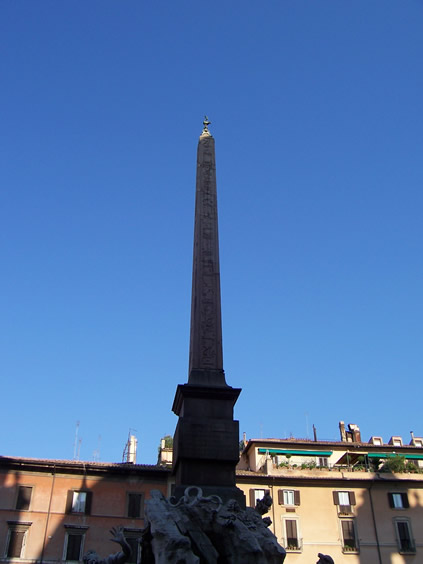
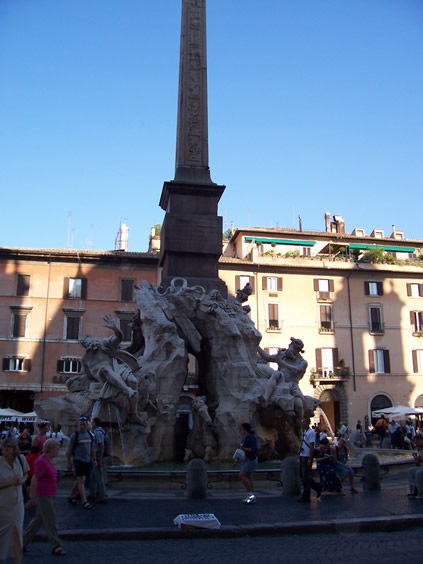
magnificient fountains decorate Piazza Navona: the Fountain
of the Four Rivers by Bernini (in the center of the
piazza), the Fountain of the Moor by Bernini (south
side of the piazza), and the Fountain of Neptune by
Giacomo della Porta (north side of the piazza). To the
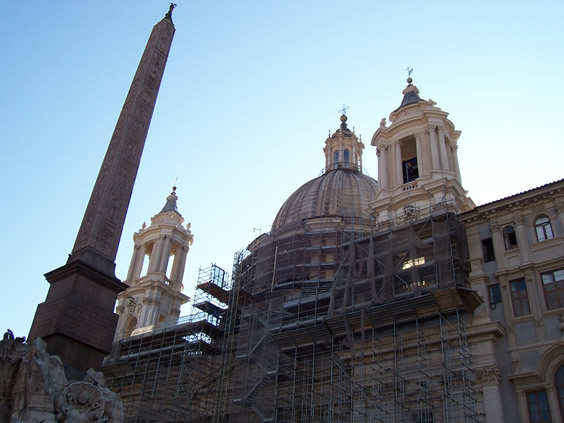
western side of the piazza stands the delightful church
of Sant'Angese in Agone. It is a magnificent Baroque
building designed by G. Rainaldi and Borromini. Beneath
it are some remains of the original church and of the
Circus of Domitian.
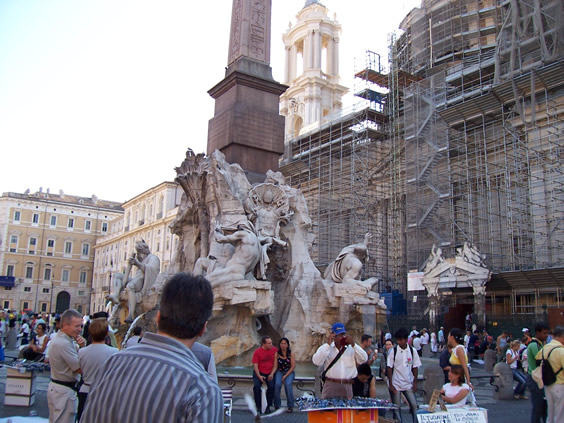
Piazza
Navona is an extremely lively place with open air cafes
around it. During the summer there are numerous artists
who draw or paint members of the public for a fee. The
place is crowded each day and there are often buskers
and sometimes mimes to entertain.
All
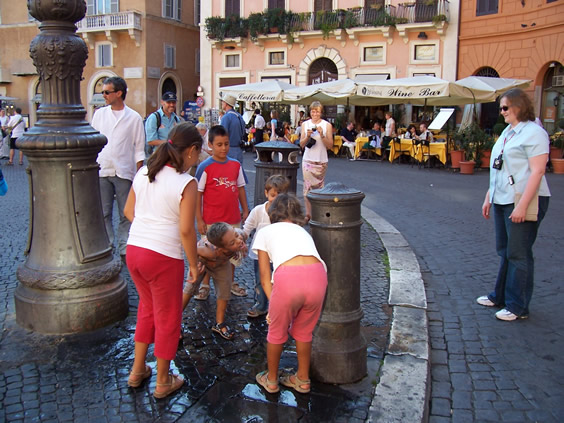
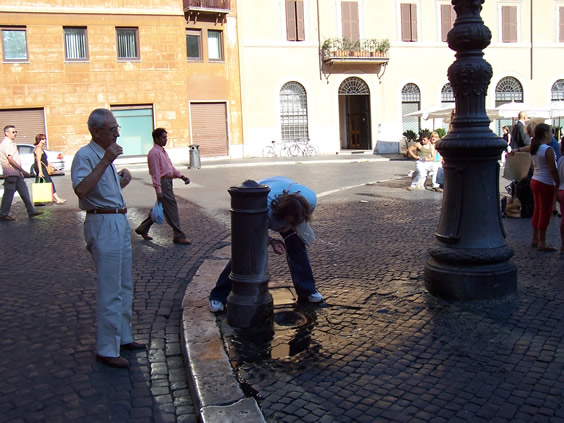
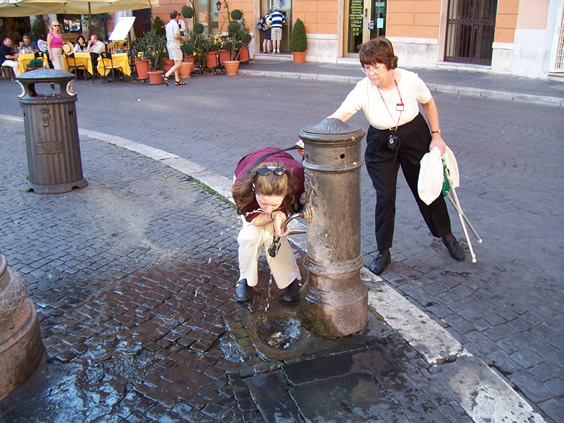
around Rome are these neat drinking fountains. They
look like a cylinder with a spout sticking out of the
side. The water is continually running, so all you have
to do is plug up the main hole and the water shoots
out of a smaller hole at the top of the spout. It is
really good water and really fun to drink out of. Kristi
and I wanted to try it, so we figured "When in
Rome, do as the Romans..." |