The
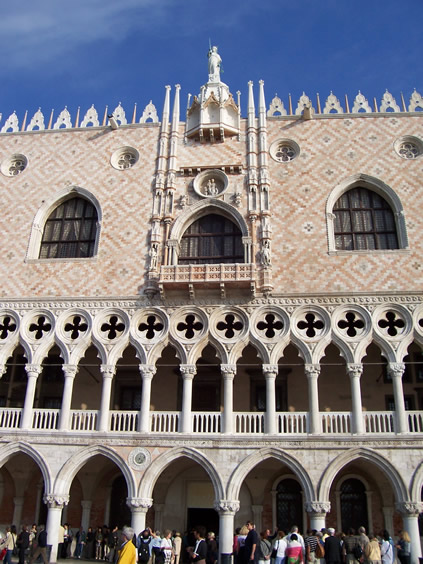
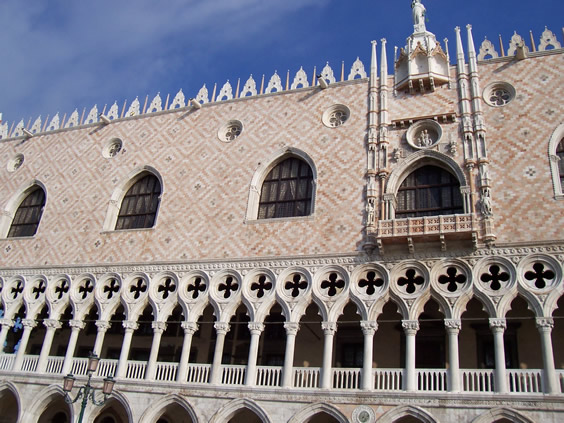
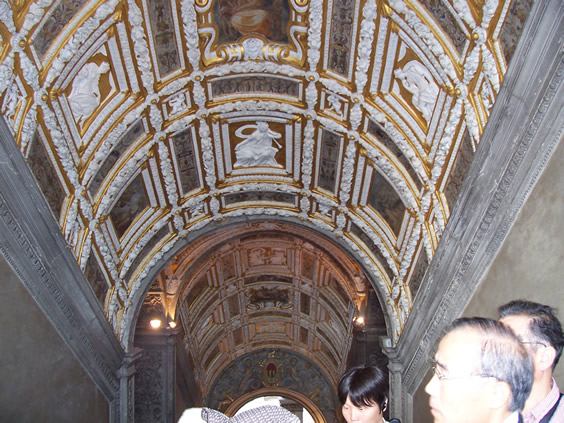
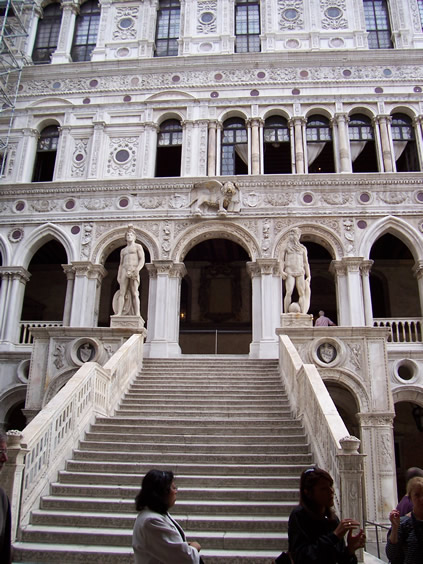
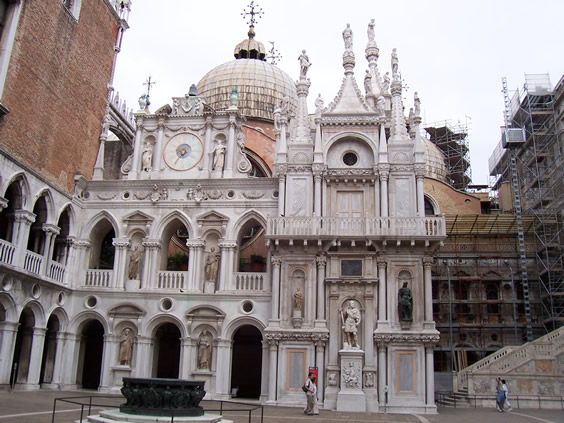
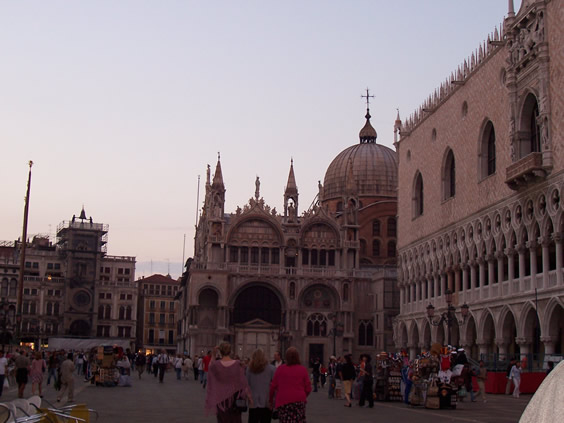
Palazzo Ducale (Doge's Palace) got its present form after
radical changing during the 14th and 16th century. It was
the Doge's residence and at the same time seat of many different
political and social institutions. The first floor was occupied
by minor institutions, such as the Avogaria or lawyers offices,
where law cases were examined; the Chancellery; the Censors
and Provveditori della Milizia del Mar (Naval Offices) which
oversaw the care and equipping of ships. The
Grand Council chamber, the largest room of the palace, the
Ballot chamber, where the committee met to elect the Doge,
and the Doge's apartments are located on the second floor.
The
Sala del Collegio, where foreign ambassadors were received,
and rooms used by the state security service like the Council
of Ten are located on the third floor. The Bussola chamber
is a small room with a box where citizens could submit written
complaints against other citizens. The Sala dei Tre Capi (Three
Chiefs Room) was used by three components of the Council of
Ten, who kept that place only for one month. The State Inquisitor
Room was used to interrogate prisoners.
Throughout
Europe the Serenissima's government was considered a model
of stability, honesty and demonstrated the possibility of
combining the monarchy, aristocracy and democracy, in the
figures of the Doge, the Senate and the Grand Council. The
Doge represented the unity of the Republic. He was elected
for life by the Grand Council, chosen from among the greatest
Venetian families and in general was older than 70.
|
| |
| Bridge
of Sighs: |
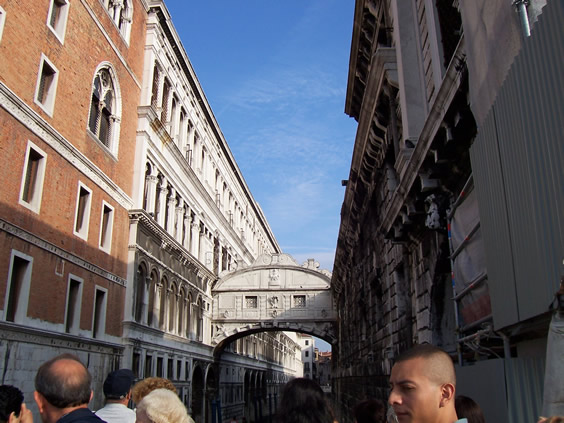
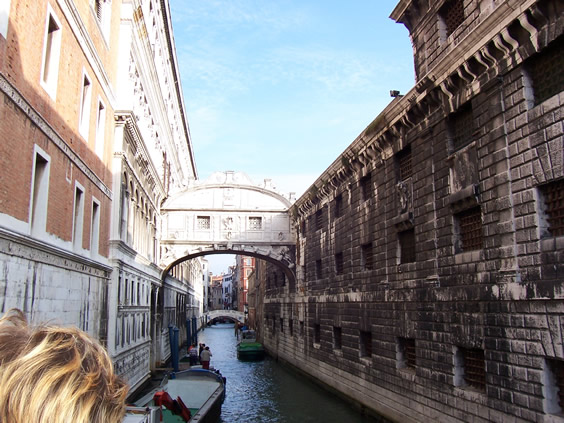
The Bridge of Sighs is located between the Doge's Palace and the Prison. This bridge received its name in the 17th century, because the prisoners who passed through it on their way to the prison cells on the other side would most likely see the beautiful sight of the lagoon and the island of S. Giorgio and freedom for the last time. In this prison, Casanova and Galileo Galilee spent part of their lives here. |
| |
| Rialto
Bridge: |
The
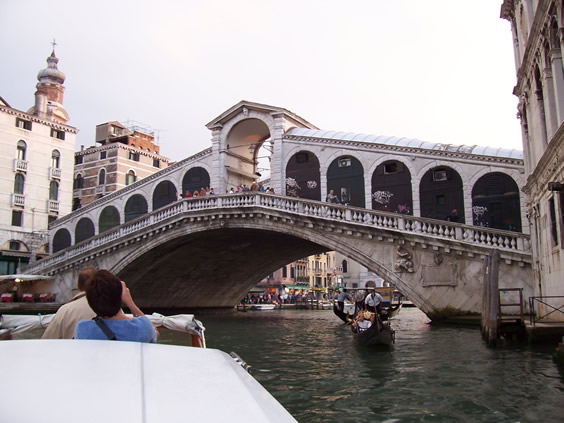
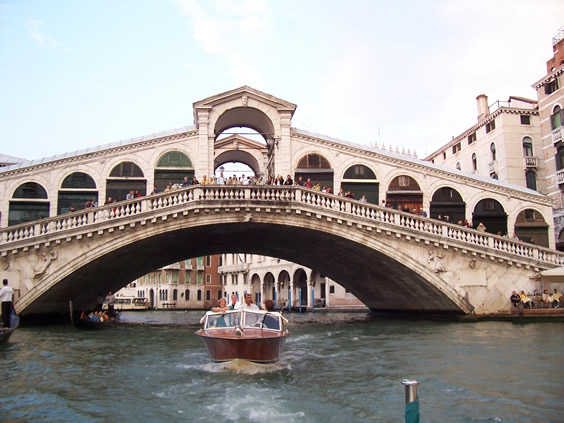
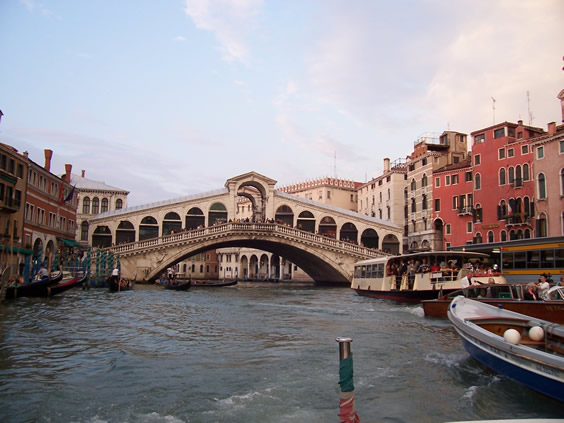
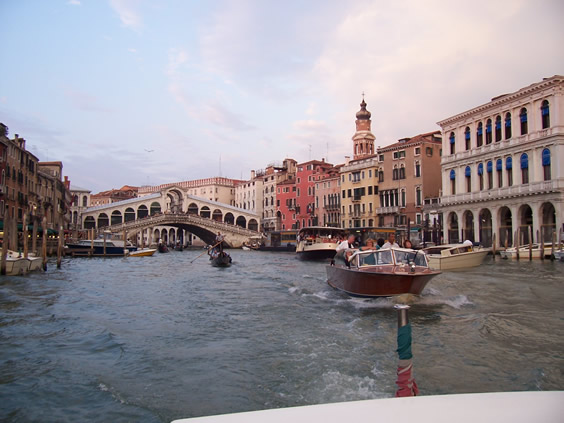
Rialto Bridge is the most famous bridge in town. It
was constructed at the end of the 16th century. It is the only covered bridge in the city. On the bridge you will find several souvenir shops.
From these pictures, you can also see the three types of passenger boats of Venice, the waterbus, the gondola, and the water taxi. We were fortunate to be able to take each of these boats during our time in Venice. |
|